How to Do Torso Twists Correctly: Step-by-Step Guide for Beginners

Learn how to do torso twists with perfect form, avoid common mistakes, and discover the best torso twist variations to improve mobility, core function, and athletic performance.

Torso twists are one of the most effective dynamic warm-up exercises for improving spinal mobility, activating the core, and preparing the body for movement. Whether you are training for sports, strength training, military fitness, or general health, mastering torso twists is essential.


What Are Torso Twists?

A torso twist is a dynamic mobility exercise where you rotate your upper body from side to side while keeping your lower body stable.

Torso twists are considered one of the best mobility exercises because they improve rotational movement, increase blood flow, and activate the muscles responsible for trunk stability.

Torso twists are commonly used in:

  • Dynamic warm-up routines
  • Athletic performance training
  • Strength and conditioning programs
  • Mobility and rehabilitation sessions

Unlike static stretches, torso twists actively prepare the spine and core for movement.

Benefits of Torso Twists

Torso twists are one of the most effective exercises for improving mobility and movement quality.

Benefits include:

  • Improves spinal mobility
  • Increases rotational flexibility
  • Activates the core muscles
  • Enhances athletic performance
  • Improves coordination and balance
  • Requires no equipment

Few warm-up exercises prepare the torso and core as effectively as torso twists.

Muscles Worked in Torso Twists

Torso twists activate several muscles throughout the core and upper body.

Primary Muscles
  • External Obliques
  • Internal Obliques
Secondary Muscles
  • Rectus Abdominis
  • Transverse Abdominis
  • Erector Spinae
  • Hip Stabilizers
  • Lower Back Muscles

Because of this muscle activation, torso twists are one of the best exercises for improving rotational movement and core function.


How to Do Torso Twists (Step-by-Step)

Step 1: Stand Tall

Begin with:

  • Feet shoulder-width apart
  • Knees slightly bent
  • Chest up
  • Core engaged

Tip: Maintain a relaxed posture throughout the movement.

Step 2: Raise Your Arms

Lift your arms in front of your body or bend your elbows at approximately 90 degrees.

Focus on:

  • Keeping your shoulders relaxed
  • Maintaining an upright posture
  • Engaging your core

This creates a stable starting position.

Step 3: Rotate to One Side

Slowly rotate your torso to one side.

Focus on:

  • Turning through the upper body
  • Keeping your hips relatively stable
  • Moving smoothly and under control

Avoid forcing the movement.
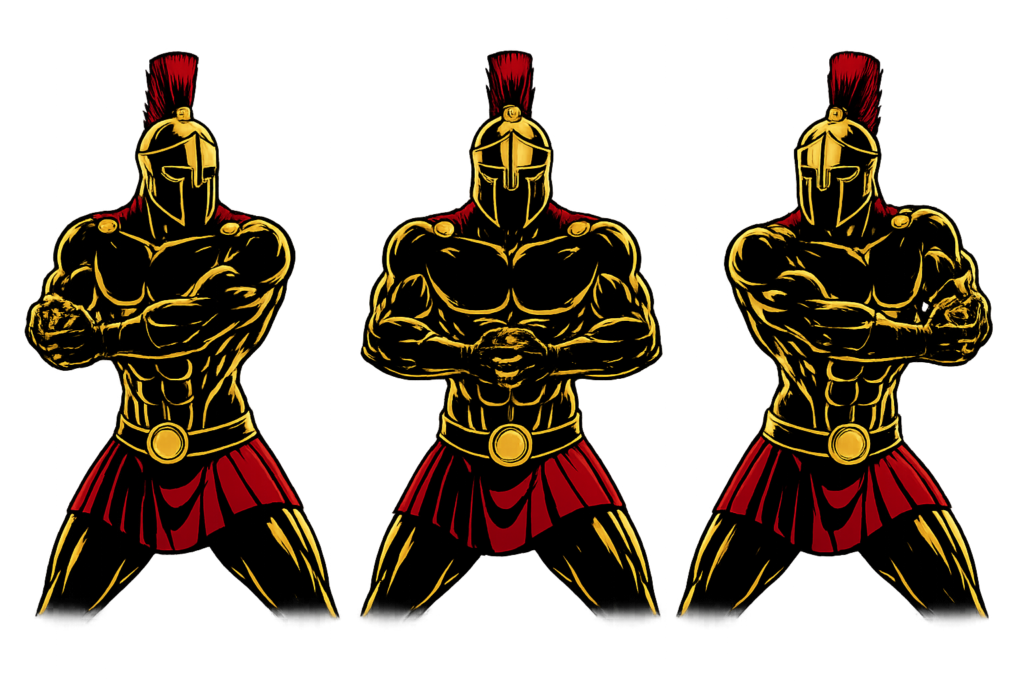
Warrior showcasing How to do Torso Twists with proper form

Step 4: Rotate to the Opposite Side

Rotate through the center and continue toward the opposite side.

At this stage:

  • Maintain balance
  • Keep your chest up
  • Control the movement

Allow the rotation to come from your torso, not your arms.

Step 5: Continue Alternating Sides

Repeat the movement side to side for the desired duration or number of repetitions.

Maintain smooth and controlled rotations throughout the exercise.


Torso Twists Form Checklist

Use this quick checklist to ensure perfect torso twist form.

  • Keep your chest up
  • Maintain a tight core
  • Rotate through the torso
  • Use smooth and controlled movements
  • Avoid excessive twisting

Perfect form improves mobility and reduces the risk of injury.


Common Torso Twists Mistakes

Twisting Too Aggressively

Problem: Places unnecessary stress on the spine.

Fix: Move through a comfortable range of motion.

Using the Arms Instead of the Torso

Problem: Reduces core activation.

Fix: Focus on rotating your ribcage and torso rather than swinging your arms.

Moving Too Quickly

Problem: Reduces mobility benefits and control.

Fix: Perform each repetition slowly and deliberately.

Rounding the Back

Problem: Compromises posture and movement quality.

Fix: Keep your chest up and maintain a neutral spine.

Holding Your Breath

Problem: Creates unnecessary tension.

Fix: Breathe naturally throughout the exercise.

Controlled movement always beats forced movement.


Torso Twists Variations

Once you master the basic torso twist, different variations can help improve mobility and develop greater rotational strength.

Standing Torso Twists

The most common variation.

How to Do Standing Torso Twists

  • Stand upright with your feet shoulder-width apart
  • Rotate side to side under control
  • Maintain good posture throughout

This variation is ideal for warm-ups and mobility work.

Seated Torso Twists

Reduces lower-body involvement.

How to Do Seated Torso Twists

  • Sit upright on a chair or bench
  • Cross your arms over your chest
  • Rotate side to side slowly

This variation emphasizes spinal mobility.

Resistance Band Torso Twists

Adds resistance to the movement.

How to Do Resistance Band Torso Twists

  • Anchor a resistance band at chest height
  • Hold the band with both hands
  • Rotate away from the anchor point

This variation develops rotational strength.

Russian Twists

An advanced progression.

How to Do Russian Twists

  • Sit on the floor with your feet elevated
  • Lean back slightly
  • Rotate your torso side to side

This variation challenges both strength and stability.


Final Thoughts

Torso twists are one of the most effective mobility exercises you can master.

They build:

  • Spinal mobility
  • Rotational flexibility
  • Core activation
  • Athletic readiness
  • Functional movement quality

Progress may feel subtle because torso twists are primarily a mobility exercise. However, with consistent practice and proper form, your movement quality and rotational control will steadily improve. Learn more about Stretching Here.

Quality movement is always better than rushed movement.

Focus on control, posture, and smooth rotations.

A warrior moves with freedom before he moves with force.

Essential Gear for Torso Twists

The right equipment can make torso twists more effective, more comfortable, and easier to progress with. Here are the essentials every warrior should consider:

  • Resistance Bands: Add resistance for rotational strength variations.
  • Exercise Mat: Provides a comfortable surface for seated and floor variations.
  • Medicine Ball: Increases resistance during advanced twisting exercises.
  • Balance Trainer: Improves core stability and balance while twisting.
  • Foam Roller: Helps loosen the upper back before mobility work.

Explore our equipment guides to find the best gear for your training and take your performance to the next level.


Torso Twists FAQ

Q1: Are torso twists good before workouts?
Yes. Torso twists are an excellent dynamic warm-up exercise because they prepare the core and spine for movement.

Q2: How many torso twists should I do?
Most people can perform 10-20 repetitions per side or 30-60 seconds of continuous movement as part of a warm-up routine.

Q3: Do torso twists strengthen the core?
Torso twists primarily improve mobility and activate the core muscles. Resistance-based variations can also help develop rotational core strength.
How to Do Shoulder Rolls Correctly: Step-by-Step Guide for Beginners

Learn how to do shoulder rolls with perfect form, avoid common mistakes, and discover the best shoulder roll variations to improve mobility and upper-body function.

Shoulder rolls are one of the most effective dynamic mobility exercises for increasing blood flow, relieving tension, and preparing the shoulders and upper back for training. Whether you are warming up for strength training, sports, or military fitness, mastering shoulder rolls is essential.


What Are Shoulder Rolls?

A shoulder roll is a dynamic mobility exercise where you rotate your shoulders in a circular motion by elevating, retracting, depressing, and protracting the shoulder blades.

Shoulder rolls are considered one of the best warm-up exercises because they improve shoulder mobility and activate the muscles responsible for posture and shoulder stability.

Shoulder rolls are commonly used in:

  • Dynamic warm-up routines
  • Strength and conditioning programs
  • Athletic performance training
  • Mobility and rehabilitation sessions

Unlike static stretches, shoulder rolls actively prepare the upper body for movement while helping reduce stiffness.

Benefits of Shoulder Rolls

Shoulder rolls are one of the most effective exercises for improving shoulder health and mobility.

Benefits include:

  • Improves shoulder mobility
  • Increases blood flow to the upper body
  • Helps relieve tension and stiffness
  • Activates postural muscles
  • Enhances shoulder stability
  • Requires no equipment

Few mobility exercises prepare the shoulders as effectively as shoulder rolls.

Muscles Worked in Shoulder Rolls

Shoulder rolls activate several muscles surrounding the shoulders and upper back.

Primary Muscles
  • Trapezius
  • Deltoids
Secondary Muscles
  • Rhomboids
  • Levator Scapulae
  • Serratus Anterior
  • Rotator Cuff Muscles
  • Upper Back Stabilizers

Because of this muscle activation, shoulder rolls are one of the best exercises for improving shoulder function and posture.


How to Do Shoulder Rolls (Step-by-Step)

Step 1: Stand Tall

Begin with:

  • Feet shoulder-width apart
  • Chest up
  • Core engaged
  • Arms relaxed by your sides

Tip: Maintain good posture throughout the movement.

Step 2: Lift Your Shoulders

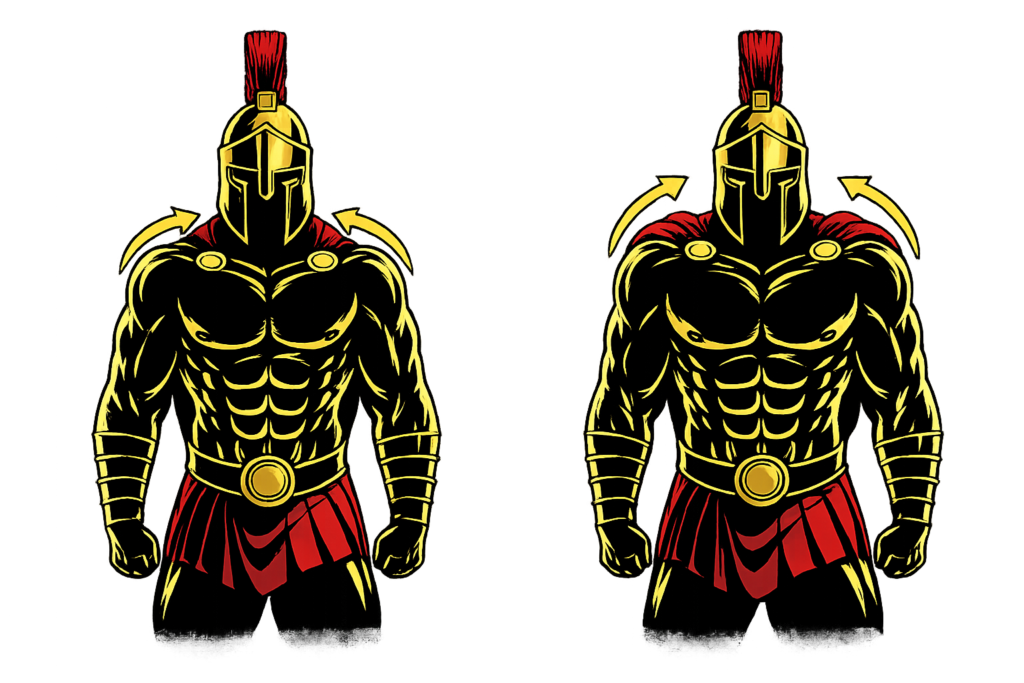
Raise your shoulders toward your ears.

Focus on:

  • Moving smoothly
  • Staying relaxed
  • Avoiding excessive tension

This initiates the rolling motion.

Step 3: Roll Your Shoulders Back

Move your shoulders backward while squeezing your shoulder blades together.

Focus on:

  • Using a full range of motion
  • Maintaining an upright posture
  • Keeping the movement controlled

Avoid rushing the exercise.

Warrior showcasing How to do Shoulder Rolls with proper form

Step 4: Lower Your Shoulders

Continue the circular motion by lowering your shoulders.

At this stage:

  • Keep your neck relaxed
  • Maintain control
  • Breathe normally

Complete the full circle.

Step 5: Reverse Directions

After several repetitions, switch directions and roll the shoulders forward.

Perform equal repetitions in both directions for balanced mobility.


Shoulder Rolls Form Checklist

Use this quick checklist to ensure perfect shoulder roll form.

  • Maintain good posture
  • Use smooth, controlled movements
  • Keep your neck relaxed
  • Move through a comfortable range of motion
  • Perform rolls in both directions

Perfect form improves mobility and reduces injury risk.


Common Shoulder Rolls Mistakes

Moving Too Quickly

Problem: Reduces mobility benefits and control.

Fix: Perform each repetition slowly and deliberately.

Shrugging Excessively

Problem: Creates unnecessary tension in the neck.

Fix: Use a comfortable range of motion.

Leaning the Torso

Problem: Reduces shoulder involvement.

Fix: Keep your chest up and your core engaged.

Holding Your Breath

Problem: Increases tension throughout the body.

Fix: Breathe naturally during each repetition.

Using Jerky Movements

Problem: Places unnecessary stress on the joints.

Fix: Focus on smooth and controlled circles.

Controlled movement always beats rushed movement.


Shoulder Rolls Variations

Once you master the basic shoulder roll, different variations can help improve mobility and activate additional muscles.

Forward Shoulder Rolls

A beginner-friendly variation.

How to Do Forward Shoulder Rolls

  • Lift your shoulders toward your ears
  • Roll them forward and downward
  • Repeat with controlled movements

This variation helps loosen tight muscles.

Backward Shoulder Rolls

The most common variation.

How to Do Backward Shoulder Rolls

  • Lift your shoulders upward
  • Roll them backward while squeezing the shoulder blades
  • Complete the circle slowly

This variation promotes better posture.

Single-Arm Shoulder Rolls

Improves unilateral mobility.

How to Do Single-Arm Shoulder Rolls

  • Rotate one shoulder at a time
  • Maintain proper posture
  • Alternate sides

This variation helps address imbalances.

Weighted Shoulder Rolls

An advanced variation.

How to Do Weighted Shoulder Rolls

  • Hold light dumbbells
  • Perform slow shoulder rolls
  • Maintain full control

This variation improves muscular endurance and shoulder stability.


Final Thoughts

Shoulder rolls are one of the most effective mobility exercises you can master.

They build:

  • Shoulder mobility
  • Joint health
  • Upper-body coordination
  • Postural awareness
  • Functional movement quality

Progress may feel subtle because shoulder rolls are primarily a mobility exercise. However, with consistent practice and proper form, your shoulder health and movement quality will steadily improve. Learn more about Stretching Here.

Quality movement is always better than rushed movement.

Focus on control, posture, and smooth repetitions.

A warrior maintains his armor before entering the battle.

Essential Gear for Shoulder Rolls

While shoulder rolls require no equipment, the following gear can improve your warm-ups, increase shoulder mobility, and help you progress to more challenging variations.

  • Resistance Bands: Add light resistance to improve shoulder stability.
  • Light Dumbbells: Use for weighted shoulder roll variations.
  • Exercise Mat: Provides a comfortable surface for mobility routines.
  • Foam Roller: Loosens tight upper-back and shoulder muscles before training.
  • Massage Ball: Targets muscle knots around the shoulders to improve mobility.

Shoulder Rolls FAQ

Q1: Are shoulder rolls good before workouts?
Yes. Shoulder rolls are an excellent dynamic warm-up exercise because they increase blood flow and prepare the shoulders for movement.

Q2: How many shoulder rolls should I do?
Most people can perform 10-20 repetitions in each direction or 20-60 seconds as part of a warm-up routine.

Q3: Can shoulder rolls improve posture?
Yes. When performed consistently, shoulder rolls can help improve shoulder mobility, reduce stiffness, and promote better posture.

How to Do Arm Circles Correctly: Step-by-Step Guide for Beginners

Learn how to do arm circles with perfect form, avoid common mistakes, and discover the best arm circle variations to improve shoulder mobility and upper-body function.

Arm circles are one of the most effective dynamic warm-up exercises for increasing blood flow, improving shoulder mobility, and preparing the upper body for training. Whether you are warming up for strength training, sports, or military fitness, mastering arm circles is essential.


What Are Arm Circles?

An arm circle is a dynamic mobility exercise where you extend your arms out to your sides and move them in circular motions.

Arm circles are considered one of the best shoulder warm-up exercises because they improve mobility while activating the muscles surrounding the shoulder joint.

Arm circles are commonly used in:

  • Dynamic warm-up routines
  • Athletic performance training
  • Strength and conditioning programs
  • Rehabilitation and mobility work

Unlike static stretches, arm circles actively prepare the muscles and joints for movement.

Benefits of Arm Circles

Arm circles are one of the most effective exercises for improving shoulder function.

Benefits include:

  • Improves shoulder mobility
  • Increases blood flow to the upper body
  • Activates the shoulder muscles
  • Enhances range of motion
  • Helps reduce injury risk during training
  • Requires no equipment

Few warm-up exercises prepare the shoulders as effectively as arm circles.

Muscles Worked in Arm Circles

Arm circles activate several upper-body muscles simultaneously.

Primary Muscles
  • Deltoids
  • Rotator Cuff Muscles
Secondary Muscles
  • Trapezius
  • Pectoralis Major
  • Serratus Anterior
  • Rhomboids
  • Upper Back Stabilizers

Because of this muscle activation, arm circles are one of the best exercises for preparing the upper body for exercise.


How to Do Arm Circles (Step-by-Step)

Step 1: Stand Tall

Begin with:

  • Feet shoulder-width apart
  • Chest up
  • Core engaged
  • Arms extended out to the sides

Tip: Keep your shoulders relaxed throughout the movement.

Step 2: Start With Small Circles

Move your arms in small circular motions.

Focus on:

  • Keeping the movement smooth
  • Maintaining straight arms
  • Avoiding excessive tension

Start slowly to establish control.

Step 3: Gradually Increase the Circle Size

Increase the diameter of the circles over time.

Focus on:

  • Maintaining good posture
  • Keeping the movement controlled
  • Breathing normally

Avoid shrugging your shoulders.

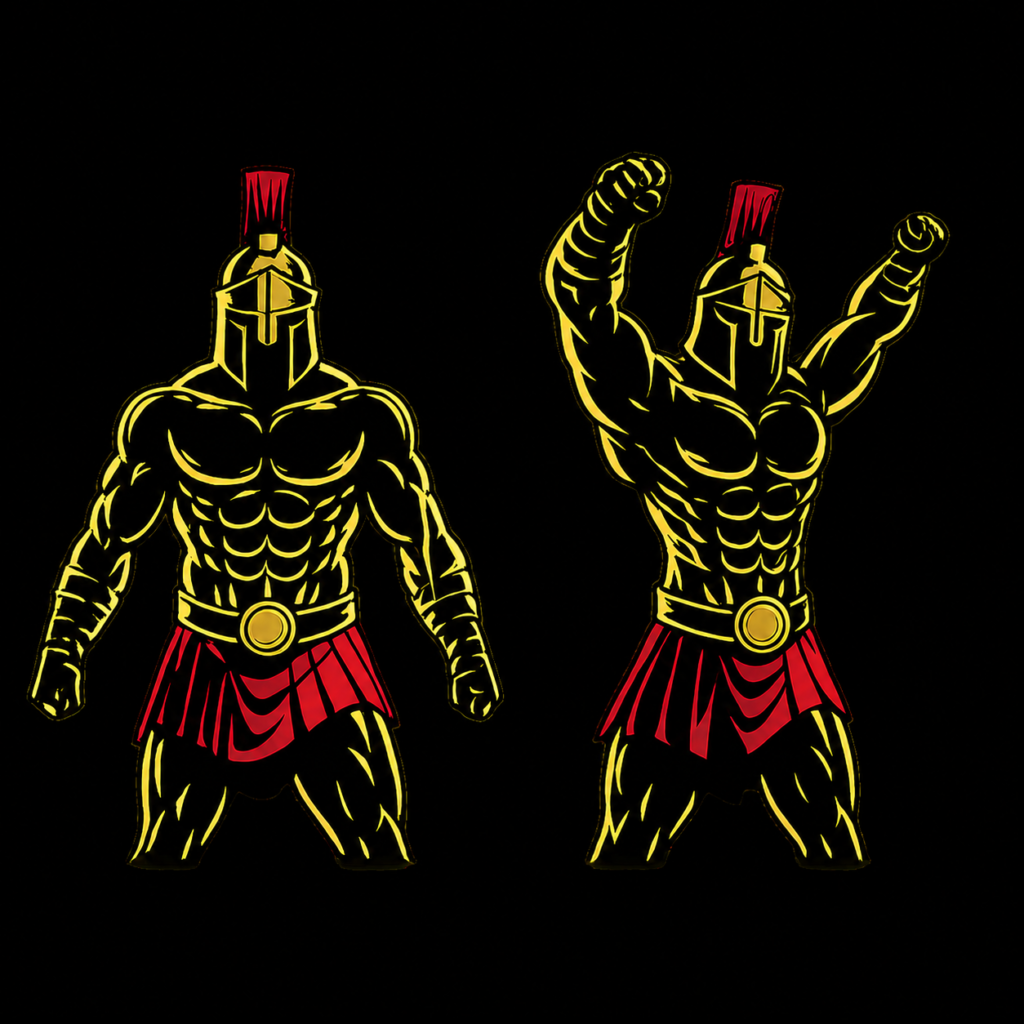
Warrior showcasing How to do Arm Circles with proper form

Step 4: Reverse the Direction

After completing several repetitions, switch directions.

At this stage:

  • Continue using controlled movements
  • Maintain straight arms
  • Keep your core engaged

This helps improve shoulder mobility evenly.

Step 5: Continue for the Desired Duration

Perform arm circles for 20-60 seconds in each direction.

Maintain smooth and controlled movements throughout.


Arm Circles Form Checklist

Use this quick checklist to ensure perfect arm circle form.

  • Keep your arms straight
  • Maintain good posture
  • Use smooth circular motions
  • Keep your shoulders relaxed
  • Reverse directions evenly

Perfect form improves mobility and reduces injury risk.


Common Arm Circles Mistakes

Shrugging the Shoulders

Problem: Creates unnecessary tension.

Fix: Keep your shoulders relaxed throughout the exercise.

Moving Too Quickly

Problem: Reduces control and effectiveness.

Fix: Use smooth and controlled circles.

Bending the Arms Excessively

Problem: Limits shoulder involvement.

Fix: Keep your arms fully extended.

Arching the Lower Back

Problem: Compromises posture.

Fix: Engage your core and maintain a neutral spine.

Using Jerky Movements

Problem: Places unnecessary stress on the shoulder joints.

Fix: Perform the movement with consistent control.

Controlled movement always beats speed.


Arm Circles Variations

Once you master the basic arm circle, different variations can help improve mobility and target different muscles.

Small Arm Circles

A beginner-friendly variation.

How to Do Small Arm Circles

  • Extend your arms out to the sides
  • Perform tight circular motions
  • Maintain good posture

This variation emphasizes control and endurance.

Large Arm Circles

Improves shoulder range of motion.

How to Do Large Arm Circles

  • Gradually increase the circle size
  • Maintain straight arms
  • Reverse directions after several repetitions

This variation enhances mobility.

Forward and Backward Arm Swings

Adds dynamic shoulder activation.

How to Do Forward and Backward Arm Swings

  • Swing your arms forward and backward
  • Maintain a smooth rhythm
  • Avoid forcing the movement

This variation improves blood flow and flexibility.

Weighted Arm Circles

An advanced variation.

How to Do Weighted Arm Circles

  • Hold light dumbbells
  • Perform small controlled circles
  • Maintain proper posture

This variation increases muscular endurance and shoulder stability.


Final Thoughts

Arm circles are one of the most effective exercises you can master for shoulder mobility and upper-body preparation.

They build:

  • Shoulder mobility
  • Joint health
  • Muscular endurance
  • Upper-body coordination
  • Functional movement quality

Progress may feel subtle because arm circles are primarily a mobility exercise. However, with consistent practice and proper form, your shoulder function and movement quality will steadily improve. Learn more about Stretching Here.

Quality movement is always better than rushed movement.

Focus on control, posture, and smooth circles.

A warrior prepares his body before he tests its strength.

Essential Gear for Arm Circles

While arm circles require no equipment to perform, the right gear can help improve comfort, mobility, and shoulder development as you progress.

  • Resistance Bands: Add light resistance to strengthen the shoulders and improve control.
  • Light Dumbbells: Use for weighted arm circles to build shoulder endurance.
  • Exercise Mat: Provides a comfortable surface for mobility and warm-up routines.
  • Foam Roller: Helps loosen tight shoulder and upper-back muscles before training.
  • Massage Ball: Targets muscle knots around the shoulders for better mobility.

Looking to upgrade your training setup? Explore our WarriorBodyAcademy Equipment Guides to find the best gear for your workouts.


Arm Circles FAQ

Q1: Are arm circles good before workouts?
Yes. Arm circles are an excellent dynamic warm-up exercise because they increase blood flow and prepare the shoulders for exercise.

Q2: How long should I perform arm circles?
Most people can perform arm circles for 20-60 seconds in each direction as part of a warm-up routine.

Q3: Can arm circles improve shoulder mobility?
Yes. When performed consistently, arm circles can help improve shoulder mobility, range of motion, and joint health.