Learn how to do Reverse Lunges with proper form, avoid common mistakes, and discover the best Reverse Lunge variations to build stronger legs, improve balance, and develop better lower-body control.
The Reverse Lunge is a simple but highly effective unilateral leg exercise. Unlike a forward lunge, you step backward into the lunge position, which can make it easier to control your movement while placing significant emphasis on the quadriceps, glutes, and hamstrings.
Whether you’re training at home, in the gym, or as part of a calisthenics routine, Reverse Lunges are an excellent addition to your lower-body workouts.
What Is a Reverse Lunge?
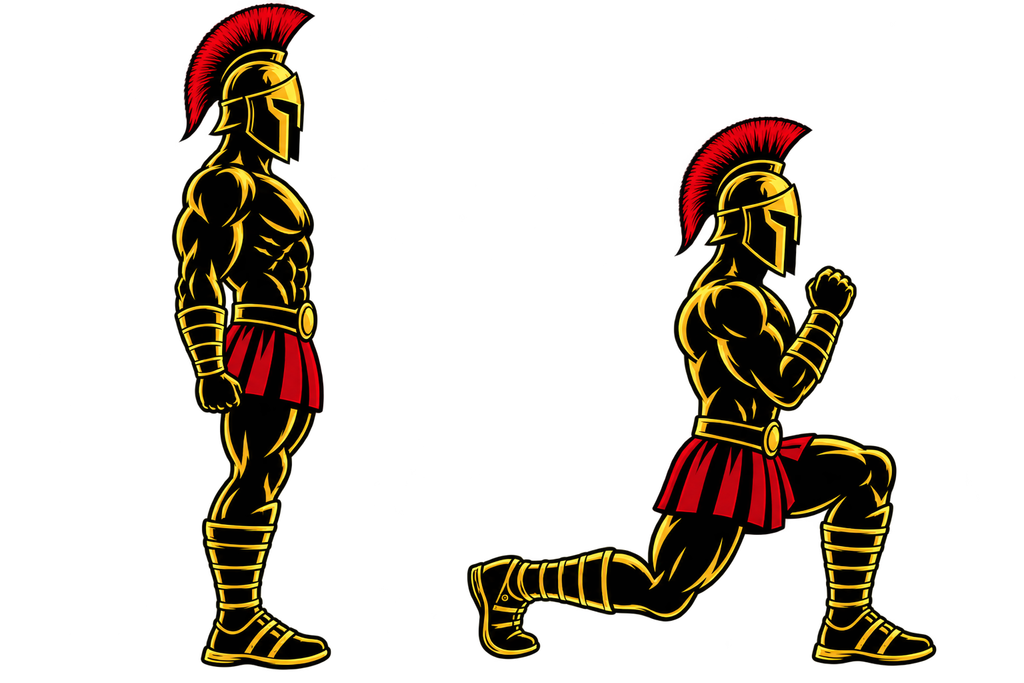
A Reverse Lunge is a unilateral lower-body exercise where you step one leg backward, lower your hips toward the floor, and then drive through your front foot to return to the starting position.
The movement trains one side of the body at a time, making it useful for developing balanced leg strength and stability.
Reverse Lunges are commonly used in:
- Bodyweight workouts
- Calisthenics training
- Strength training
- Athletic conditioning
- Lower-body mobility routines
- Home workouts
The exercise can be performed with bodyweight or progressed by holding dumbbells, kettlebells, or other forms of resistance.
Benefits of Reverse Lunges
Reverse Lunges provide several strength, balance, and coordination benefits.
Benefits include:
- Strengthens the quadriceps
- Builds stronger glutes
- Works the hamstrings
- Improves single-leg balance
- Develops lower-body stability
- Improves coordination
- Helps correct strength imbalances
- Requires minimal equipment
Because each leg works independently, Reverse Lunges can help you identify and improve differences in strength and control between your legs.
Muscles Worked in Reverse Lunges
Reverse Lunges recruit several major muscles throughout the lower body.
Primary Muscles
- Quadriceps
- Gluteus Maximus
- Hamstrings
Secondary Muscles
- Gluteus Medius
- Calves
- Hip Flexors
- Core Muscles
Your core and stabilizing muscles work continuously to keep your torso balanced while you step backward and return to standing.
How to Do Reverse Lunges (Step-by-Step)
Step 1: Stand Upright
Stand with your feet approximately hip-width apart.
Keep your:
- Chest upright
- Core engaged
- Back neutral
- Arms relaxed
Look straight ahead and establish a stable starting position.
Step 2: Step Back
Take a controlled step backward with your right leg.
Place the ball of your right foot on the floor behind you.
Keep most of your weight centered over your front leg.
Step 3: Lower Into the Lunge
Bend both knees and lower your hips toward the floor.
As you descend:
- Keep your front foot firmly planted
- Keep your front knee tracking with your toes
- Maintain an upright torso
- Control your back knee as it moves toward the floor
Your front thigh should approach a roughly parallel position with the floor if your mobility and strength allow.
Step 4: Reach the Bottom Position
Continue lowering until your back knee is close to the floor.
At the bottom:
- Keep your front heel planted
- Keep your front knee controlled
- Maintain a neutral spine
- Keep your core engaged
Avoid allowing your front knee to collapse inward.
Step 5: Drive Back to Standing
Push firmly through the front foot.
Straighten your front leg and bring your rear leg forward to return to the starting position.
Keep the movement controlled rather than using momentum.
Step 6: Switch Legs
Repeat the movement with your opposite leg.
You can alternate legs each repetition or complete a full set on one side before switching.
Reverse Lunge Form Checklist
Use this quick checklist to ensure proper Reverse Lunge form.
- Start with a stable stance
- Step backward under control
- Keep your front foot firmly planted
- Keep your front knee aligned with your toes
- Maintain an upright torso
- Lower your rear knee toward the floor
- Brace your core
- Push through your front foot to stand
Focus on smooth, controlled repetitions rather than taking unnecessarily large steps.
Common Reverse Lunges Mistakes
Taking Too Short a Step
Problem: A very short step can cause your front knee to travel excessively forward and make the movement feel cramped.
Fix: Take a controlled step backward that allows both knees to bend comfortably.
Taking Too Long a Step
Problem: An excessively long step can make it difficult to maintain balance and control.
Fix: Experiment with your step length until you can comfortably lower and rise while keeping your torso stable.
Letting the Front Knee Collapse Inward
Problem: This reduces lower-body stability and can place unnecessary stress on the knee.
Fix: Keep your front knee tracking in the same general direction as your toes.
Leaning Too Far Forward
Problem: Excessive forward lean can shift your balance and change the movement pattern.
Fix: Keep your chest lifted and maintain a controlled, neutral torso position.
Dropping the Back Knee Hard
Problem: Allowing your rear knee to crash into the floor reduces control.
Fix: Lower your back knee slowly and stop just above the floor.
Pushing Off the Back Leg
Problem: Using the rear leg to drive yourself upward reduces the workload on the front leg.
Fix: Focus on pushing through the front foot to return to standing.
Reverse Lunge Variations
Once you master the basic Reverse Lunge, these variations can help you progress.
Assisted Reverse Lunges
An excellent beginner variation.
How to Do Assisted Reverse Lunges
- Stand beside a sturdy support.
- Hold the support lightly with one hand.
- Step one leg backward.
- Lower into the lunge.
- Push through the front foot to return to standing.
- Gradually reduce your reliance on the support.
Bodyweight Reverse Lunges
The standard variation.
How to Do Bodyweight Reverse Lunges
- Stand upright with your feet hip-width apart.
- Step one foot backward.
- Bend both knees and lower your body.
- Push through your front foot.
- Return to standing and switch legs.
Deficit Reverse Lunges
Increases the range of motion and can provide a greater challenge.
How to Do Deficit Reverse Lunges
- Stand on a stable elevated platform.
- Step one leg backward and toward the floor.
- Lower yourself under control.
- Drive through your front foot to return to the platform.
Only use a stable surface and an elevation appropriate for your strength and balance.
Dumbbell Reverse Lunges
Adds resistance to the standard movement.
How to Do Dumbbell Reverse Lunges
- Hold a dumbbell in each hand.
- Stand upright with your feet hip-width apart.
- Step one leg backward.
- Lower into the lunge.
- Push through the front foot to return to standing.
Increase the weight gradually while maintaining proper form.
Walking Reverse Lunges
Adds a dynamic balance challenge.
How to Do Walking Reverse Lunges
- Begin standing upright.
- Step backward into a Reverse Lunge.
- Return to standing.
- Continue by alternating legs.
- Move through each repetition under control.
Final Thoughts
The Reverse Lunge is one of the best unilateral exercises for developing stronger legs, glutes, balance, and lower-body control.
It develops:
- Quadriceps strength
- Glute strength
- Hamstring strength
- Single-leg stability
- Balance
- Coordination
Its backward stepping pattern also makes it a useful alternative to forward lunges and a great addition to home or gym-based leg workouts. Learn more about Leg Workouts here.
Start with bodyweight Reverse Lunges, master your balance and technique, and gradually add resistance as your strength improves.
Control every repetition, keep both legs working evenly, and focus on building strength through a full comfortable range of motion.
Essential Gear for Reverse Lunges
Reverse Lunges can be performed without equipment, but these pieces of gear can make your training more comfortable and provide options for progression.
- Exercise Mat: Provides a comfortable, non-slip surface for bodyweight lunges.
- Dumbbells: An effective way to add resistance once bodyweight Reverse Lunges become easy.
- Kettlebell: Can be held at the chest or by the sides for additional resistance.
- Resistance Bands: Can add resistance or provide assistance depending on how they are used.
Reverse Lunge FAQ
Q1: Are Reverse Lunges easier than Forward Lunges?
Many people find Reverse Lunges easier to control because stepping backward can reduce the forward momentum associated with Forward Lunges. However, difficulty depends on your strength, balance, and technique.
Q2: How many Reverse Lunges should I do?
Beginners can start with 8-12 repetitions per leg for 2-3 sets. As you become stronger, you can increase repetitions, add resistance, or use a more challenging variation.
Q3: Can I do Reverse Lunges every day?
You can practice bodyweight lunges frequently, but your muscles still need recovery after challenging training sessions. For strength-focused workouts, allow adequate recovery between demanding leg sessions.