High Pull-Ups are an advanced Pull-Up variation in which you pull your body significantly higher than during a standard Pull-Up, eventually bringing the bar toward your upper abdomen or waist as your strength and technique improve.
Unlike a Chest-to-Bar Pull-Up, the movement does not finish when your chest reaches the bar. You continue pulling upward, allowing your elbows to travel behind and then below the bar as your torso rises above it. At the highest ranges, your arms approach a position similar to the pulling portion immediately before a Muscle-Up transition.
This makes High Pull-Ups a demanding exercise for developing explosive pulling strength and progressing toward advanced calisthenics skills such as Muscle-Ups.
What Are High Pull-Ups?
High Pull-Ups are an advanced bodyweight pulling exercise performed by accelerating your body upward and pulling substantially beyond normal Pull-Up height.
A standard Pull-Up generally finishes around chin-over-bar height. A Chest-to-Bar Pull-Up progresses farther by bringing the chest toward the bar. A sufficiently advanced High Pull-Up continues upward beyond this point, bringing more of the torso above the bar and potentially pulling the bar toward the upper abdomen or waist.
As you reach these greater heights, the movement naturally changes. Your elbows travel behind and eventually downward relative to the bar, while your torso rises above it. A slight backward lean during the powerful pulling phase, followed by the torso approaching the bar, can occur as part of the movement.
High Pull-Ups are commonly used in:
- Advanced calisthenics
- Explosive Pull-Up training
- Muscle-Up preparation
- Upper-body power training
- Back workouts
- Pull-day workouts
- Street workout training
- Advanced bodyweight programs
The exercise requires a strong foundation in strict Pull-Ups before you begin focusing on maximum pulling height.
Benefits of High Pull-Ups
High Pull-Ups provide a progression beyond ordinary Pull-Ups by requiring you to generate enough force to continue raising your torso above the bar.
Benefits include:
- Develops explosive upper-body pulling strength
- Strengthens the lats and upper back
- Builds the biceps and other elbow flexors
- Develops pulling strength above chest height
- Challenges grip strength and endurance
- Improves control during powerful bodyweight movements
- Provides progression beyond standard and Chest-to-Bar Pull-Ups
- Develops pulling power useful for Muscle-Ups
- Provides a measurable way to progress pulling height
As you become stronger, you can measure progress by how far down your torso you can consistently bring the bar while maintaining controlled technique.
Muscles Worked in High Pull-Ups
High Pull-Ups involve many of the same muscles as standard Pull-Ups but require them to generate considerably more force during the upward phase.
Primary Muscles
- Latissimus Dorsi
- Biceps Brachii
- Brachialis
- Teres Major
- Trapezius
Secondary Muscles
- Rhomboids
- Posterior Deltoids
- Brachioradialis
- Forearms
- Rotator Cuff Muscles
- Core Muscles
As the body rises higher relative to the bar, the mechanics change from a conventional vertical Pull-Up toward the high pulling position used before a Muscle-Up transition.
How to Do High Pull-Ups (Step-by-Step)
Step 1: Grip the Pull-Up Bar
Grip a secure Pull-Up Bar with your palms facing away from you.
Use approximately a shoulder-width or slightly wider grip.
Wrap your fingers and thumbs securely around the bar and make sure you have enough surrounding clearance for powerful pulling.
Step 2: Establish the Starting Position
Begin underneath the bar with your arms extended.
Keep your:
- Grip secure
- Core braced
- Legs together or controlled
- Head relatively neutral
- Shoulders controlled
For strict High Pull-Up training, begin without excessive swinging.
Step 3: Initiate a Powerful Pull
Engage your shoulders and immediately begin pulling forcefully.
Drive your elbows downward while accelerating your body toward the bar.
Unlike a deliberately slow strength Pull-Up, the goal is to produce substantial upward acceleration so your body has enough momentum generated by muscular force to travel beyond normal Pull-Up height.
Step 4: Continue Past the Standard Pull-Up Position
Do not stop when your chin passes the bar.
Continue pulling aggressively as your upper chest approaches and then rises toward the bar.
Drive your elbows backward as your torso continues upward.
The movement should remain one continuous, powerful pull rather than a normal Pull-Up followed by a separate second movement.
Step 5: Pull Your Torso Above the Bar
Continue pulling as high as your strength allows.
As you become more advanced, the bar may move progressively lower relative to your torso:
- Upper chest
- Mid-chest
- Lower chest
- Upper abdomen
- Waist region
Your elbows move farther behind and eventually downward relative to the bar as your torso rises.
Do not force a specific height if you cannot reach it without excessive swinging.
Step 6: Reach the Highest Controlled Position
At the top, your torso should be substantially higher than during a standard Pull-Up.
For a highly developed High Pull-Up, the bar can approach the upper abdomen or waist while your arms are bent and your torso rises well above bar level.
This is still a pulling exercise. Do not deliberately press down on the bar and turn the repetition into the transition and support phase of a Muscle-Up.
Step 7: Lower Under Control
Allow your torso to move back below the bar as you extend your elbows.
Control the descent instead of simply dropping.
Return to the hanging position, regain control, and reset before performing another repetition.
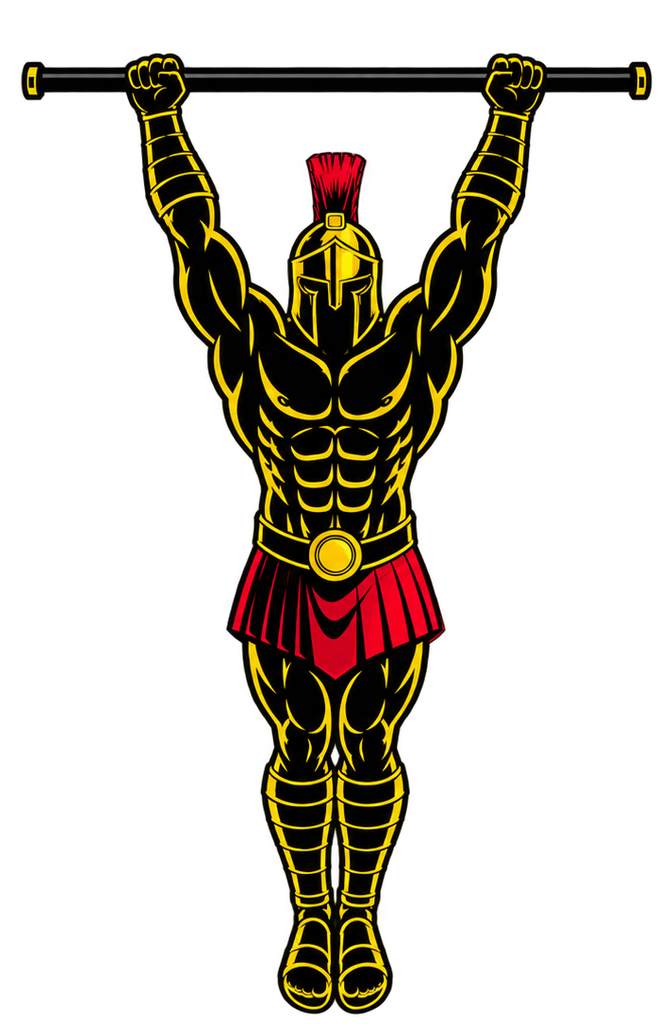
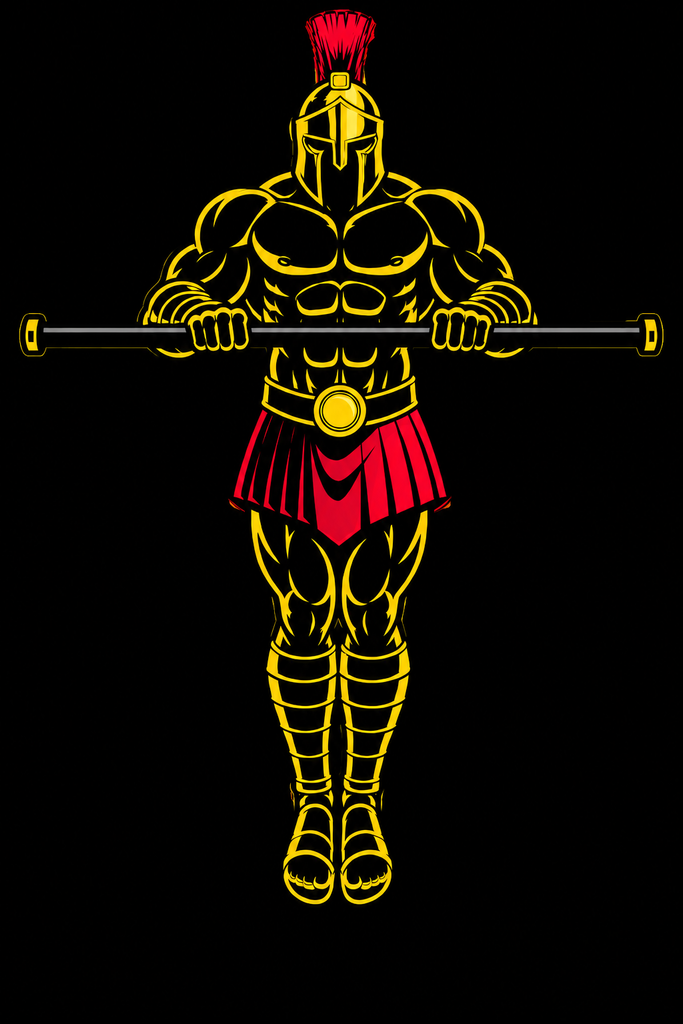
High Pull-Ups Form Checklist
Use this checklist to maintain proper High Pull-Up technique.
- Use a sturdy and secure Pull-Up Bar
- Grip approximately shoulder-width or slightly wider
- Begin from a controlled hang
- Keep your grip secure
- Brace your core
- Generate a powerful initial pull
- Drive your elbows down and backward
- Continue pulling beyond chin and chest height
- Raise your torso as high above the bar as possible
- Keep your legs controlled
- Minimize unnecessary kipping and kicking
- Avoid turning the top into a Muscle-Up press
- Maintain control at your highest position
- Lower yourself under control
- Prioritize pulling height and quality over repetition count
The defining goal is to progressively raise more of your torso above the bar through a powerful pull, not merely to touch your chest to it.
Common High Pull-Ups Mistakes
Stopping at Chest Height
Problem: Ending the repetition once your upper chest reaches the bar turns the movement into a Chest-to-Bar Pull-Up rather than training the greater height possible with High Pull-Ups.
Fix: Continue pulling beyond chest height. As your strength improves, aim to bring the bar progressively toward the mid-chest, lower chest, and eventually upper abdomen.
Pulling Too Slowly
Problem: A slow concentric phase makes it considerably harder to generate enough upward velocity to raise your torso far above the bar.
Fix: Pull as powerfully as you can while maintaining control. High Pull-Ups are intended to develop explosive pulling ability.
Using Excessive Kipping
Problem: Large hip swings and aggressive leg kicks can propel your body upward without requiring the same level of upper-body pulling power.
Fix: Keep your body controlled and generate the majority of your height through the pull. A strict High Pull-Up should not depend on a large kip.
Pulling Away From the Bar Too Much
Problem: Excessive backward movement can send your body away from the bar instead of allowing your torso to rise into a useful high-pull position.
Fix: Use only the torso movement necessary for the high pull and keep the bar relatively close as your torso rises.
Trying to Press Over the Bar
Problem: Once you reach sufficient height, you may instinctively begin transitioning your chest over the bar and pressing downward.
Fix: For High Pull-Up training, finish at your highest pulling position and then descend. Save the transition and press for Muscle-Up practice.
Using an Excessively Wide Grip
Problem: A very wide grip can shorten your range of motion and make it more difficult to achieve maximum pulling height.
Fix: Use approximately a shoulder-width or slightly wider grip that allows you to pull powerfully through a large range.
Performing Too Many Fatigued Repetitions
Problem: Explosive pulling performance drops as fatigue accumulates. Later repetitions may become dramatically lower or require more swinging.
Fix: Prioritize a smaller number of powerful, high-quality repetitions and end the set when your pulling height noticeably decreases.
High Pull-Ups Progressions and Variations
High Pull-Ups can be scaled according to your current strength and the height you are capable of achieving.
Band-Assisted High Pull-Ups
A Resistance Band reduces the effective bodyweight you must accelerate.
How to Do Band-Assisted High Pull-Ups
- Secure a suitable Resistance Band to the Pull-Up Bar.
- Carefully place your foot or knee into the band.
- Begin from a controlled hanging position.
- Pull upward as powerfully as possible.
- Continue beyond ordinary Pull-Up height.
- Reach your highest controlled torso position.
- Lower under control without bouncing on the band.
Chest-to-Bar Pull-Ups
Chest-to-Bar Pull-Ups provide an important progression toward true high pulling.
How to Do Chest-to-Bar Pull-Ups
- Begin from a controlled overhand hang.
- Engage your shoulders and brace your core.
- Pull upward powerfully.
- Continue beyond chin-over-bar height.
- Bring your upper chest toward the bar.
- Maintain control at the top.
- Lower yourself smoothly.
Abdomen-to-Bar High Pull-Ups
This advanced variation develops the ability to pull significantly beyond chest height.
How to Do Abdomen-to-Bar High Pull-Ups
- Begin from a controlled hang.
- Generate a powerful initial pull.
- Continue pulling beyond your chest.
- Drive your elbows backward and downward.
- Raise your torso until the bar approaches your upper abdomen.
- Keep your body controlled rather than transitioning over the bar.
- Lower yourself under control.
Band-Assisted Abdomen-to-Bar Pull-Ups
This variation allows you to practice the advanced pulling height with less effective bodyweight.
How to Do Band-Assisted Abdomen-to-Bar Pull-Ups
- Secure an appropriate Resistance Band to the bar.
- Carefully enter the band.
- Establish a controlled hanging position.
- Accelerate upward with a powerful pull.
- Continue pulling beyond chest height.
- Bring your upper abdomen toward the bar.
- Descend under control and reset.
High Chin-Ups
The underhand grip increases the involvement of the elbow flexors while retaining the goal of maximum pulling height.
How to Do High Chin-Ups
- Grip the bar with your palms facing you.
- Begin from a controlled hang.
- Brace your core and establish shoulder control.
- Pull upward powerfully.
- Continue beyond normal Chin-Up height.
- Raise your torso as high as you can control.
- Lower yourself smoothly.
Final Thoughts
High Pull-Ups are an advanced pulling exercise designed to take you substantially beyond the range of a standard or basic Chest-to-Bar Pull-Up.
They develop:
- Explosive pulling strength
- Lat strength
- Upper-back strength
- Biceps strength
- High-range pulling ability
- Grip strength
- Bodyweight control
- Muscle-Up-specific pulling power
The goal is progressive pulling height. First develop strong standard Pull-Ups, then learn to reach the chest, lower chest, upper abdomen, and eventually even higher positions as your pulling power improves.
Do not confuse height with uncontrolled momentum. Generate your acceleration through a powerful pull, keep unnecessary kicking and swinging to a minimum, and stop your sets when your pulling height begins to deteriorate. Learn more about Pull Workouts here.
Essential Gear for High Pull-Ups
High Pull-Ups require relatively little equipment, but your setup must safely accommodate powerful bodyweight movement.
- Pull-Up Bar: A strong, securely installed bar is essential. Make sure there is enough clearance above and around the bar for your torso to rise significantly above it.
- Resistance Bands: Useful for practicing greater pulling heights before you can reach them with your full bodyweight.
- Gym Chalk: Can improve grip when sweaty hands limit your ability to pull explosively.
- Wrist Wraps: Protects the Wrists during high repetitions or explosive sets, while allowing grip strength to be improved.
- Stable Step or Platform: Useful for safely reaching a high bar and entering or exiting Resistance Band-assisted setups.
- Dip Belt or Weighted Vest: An advanced option for developing additional pulling strength once you have already mastered powerful bodyweight High Pull-Ups.
High Pull-Ups FAQ
Q1: How high should I pull during High Pull-Ups?
Pull as high as you can with good technique. Beginners to high-pull training may initially reach the chest, while advanced athletes can work toward bringing the bar to the lower chest, upper abdomen, or higher.
Q2: Should High Pull-Ups be explosive?
Yes. The upward phase should be powerful because generating greater upward velocity helps your body continue rising beyond ordinary Pull-Up height. However, the movement should still be controlled rather than relying on excessive kipping.
Q3: Do High Pull-Ups help with Muscle-Ups?
Yes. High Pull-Ups develop the powerful pulling ability needed to raise the torso high enough for a Muscle-Up transition. However, the transition and pressing portion of the Muscle-Up must also be trained separately.
Q4: Should beginners perform High Pull-Ups?
Complete beginners should first develop strong standard Pull-Ups. Chest-to-Bar Pull-Ups and Band-Assisted High Pull-Ups can then provide useful progressions toward greater pulling height.
Q5: How can I get higher on High Pull-Ups?
Improve your strict Pull-Up strength, practice explosive pulling while fresh, use assisted high pulls when appropriate, and progressively aim for lower contact points on your torso. Keep your repetitions powerful and stop the set when your pulling height noticeably decreases.