Learn how to do Sumo Squats with proper form, avoid common mistakes, and discover the best Sumo Squat variations to build stronger legs, develop your glutes, and improve lower-body mobility.
The Sumo Squat is a wide-stance squat variation that places greater emphasis on the inner thighs, glutes, and hips compared with a traditional squat. Its wider stance also allows you to train your lower body through a different movement pattern while challenging your core and balance.
Whether you’re training for strength, muscle growth, calisthenics, or general fitness, learning the Sumo Squat can add useful variety to your lower-body workouts.
What Is a Sumo Squat?
A Sumo Squat is a squat variation performed with your feet positioned significantly wider than shoulder-width apart and your toes turned outward. You lower your hips between your legs while keeping your chest controlled, then drive through your feet to return to standing.
The wide stance increases the involvement of the hip adductors and glutes while still heavily training the quadriceps.
Sumo Squats are commonly used in:
- Bodyweight workouts
- Strength training
- Lower-body hypertrophy programs
- Calisthenics training
- Mobility routines
- Athletic conditioning
The exercise can be performed with bodyweight or progressively loaded with equipment such as dumbbells and kettlebells.
Benefits of Sumo Squats
Sumo Squats provide several benefits for strength, mobility, and lower-body conditioning.
Benefits include:
- Strengthens the quadriceps
- Builds stronger glutes
- Targets the inner thighs
- Improves hip mobility
- Strengthens the hamstrings
- Develops lower-body stability
- Improves squat mechanics
- Can be performed with or without equipment
The Sumo Squat is especially useful when you want to train your lower body through a wider stance and place greater emphasis on the hips and inner thighs.
Muscles Worked in Sumo Squats
Sumo Squats engage several major muscles throughout the lower body.
Primary Muscles
- Quadriceps
- Gluteus Maximus
- Adductors
Secondary Muscles
- Hamstrings
- Gluteus Medius
- Calves
- Hip Flexors
- Core Muscles
The adductors work particularly hard to help control the wide stance and stabilize the hips throughout the movement.
How to Do Sumo Squats (Step-by-Step)
Step 1: Set Your Stance
Stand upright with your feet wider than shoulder-width apart.
Turn your toes outward slightly.
Maintain:
- Chest lifted
- Core engaged
- Back neutral
- Feet firmly planted
Tip: Your exact stance width will depend on your hip structure and mobility. Choose a position that allows you to squat comfortably without losing control.
Step 2: Brace Your Core
Before descending, tighten your abdominal muscles.
Keep your:
- Spine neutral
- Shoulders relaxed
- Chest controlled
- Eyes looking forward
A strong core will help you maintain stability throughout the movement.
Step 3: Lower Into the Squat
Bend your knees and push your hips downward between your legs.
As you descend:
- Keep your knees tracking in the same direction as your toes
- Keep your heels planted
- Maintain a controlled torso position
- Lower your hips under control
Think about pushing your knees outward rather than allowing them to collapse inward.
Step 4: Reach the Bottom Position
Continue lowering until your thighs reach a comfortable depth.
At the bottom:
- Keep both feet firmly planted
- Keep your knees aligned with your toes
- Maintain a neutral spine
- Keep your chest controlled
You do not need to force an extremely deep squat if your mobility does not allow it comfortably.
Step 5: Drive Back Up
Push through your entire foot, especially the midfoot and heel.
Extend your knees and hips simultaneously to return to the starting position.
Squeeze your glutes at the top without excessively leaning backward.
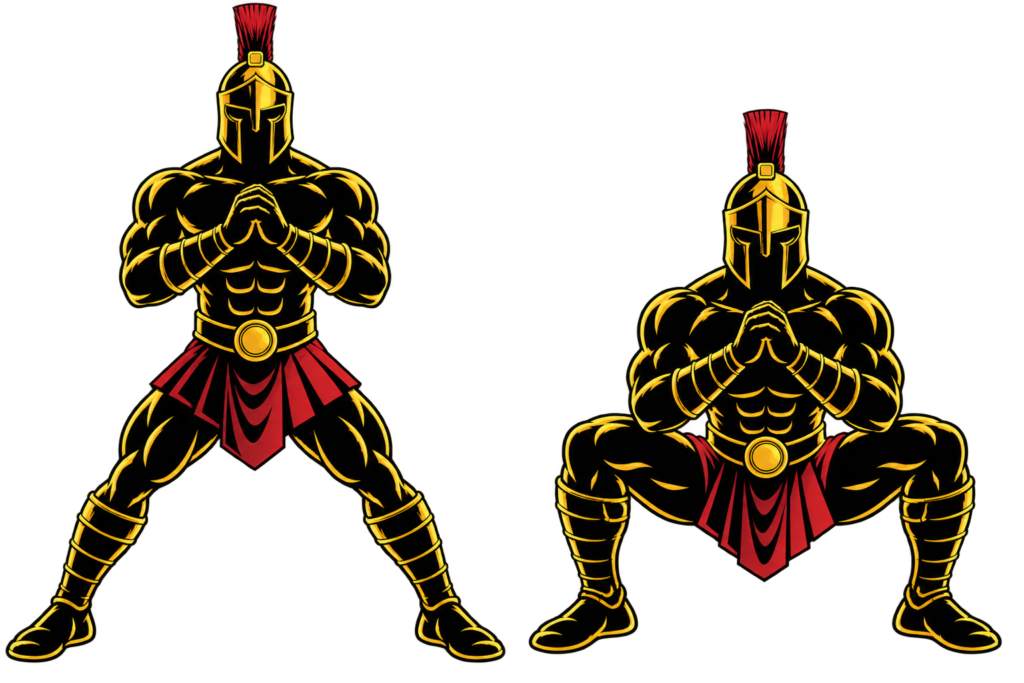
Sumo Squats Form Checklist
Use this quick checklist to ensure proper Sumo Squat form.
- Stand with a comfortably wide stance
- Turn your toes outward naturally
- Keep your heels planted
- Keep your knees aligned with your toes
- Brace your core
- Maintain a neutral spine
- Control both the descent and ascent
- Avoid forcing excessive depth
Good technique allows you to train the intended muscles while maintaining stability throughout every repetition.
Common Sumo Squats Mistakes
Using an Extremely Wide Stance
Problem: A stance that is too wide can restrict your movement and make it difficult to maintain proper alignment.
Fix: Use a stance that allows you to descend comfortably while keeping your feet stable.
Letting the Knees Collapse Inward
Problem: This reduces stability and can place unnecessary stress on the knees.
Fix: Keep your knees tracking in the same direction as your toes throughout the movement.
Lifting the Heels
Problem: Raising your heels reduces stability and changes your squat mechanics.
Fix: Keep your entire foot connected to the floor and work on your ankle mobility if necessary.
Rounding the Lower Back
Problem: Excessive spinal rounding can reduce control and make the movement less efficient.
Fix: Brace your core and maintain a neutral spinal position throughout the squat.
Forcing Depth
Problem: Trying to squat deeper than your mobility allows can cause you to lose proper positioning.
Fix: Use a comfortable range of motion and gradually improve your hip and ankle mobility over time.
Sumo Squats Variations
Once you master the bodyweight Sumo Squat, these variations can help you progress.
Assisted Sumo Squats
An excellent beginner variation.
How to Do Assisted Sumo Squats
- Stand in a comfortable wide stance.
- Hold a sturdy support with both hands.
- Lower into the squat while maintaining proper knee alignment.
- Use the support only as much as necessary.
- Return to standing under control.
Bodyweight Sumo Squats
The standard variation.
How to Do Bodyweight Sumo Squats
- Stand with your feet wide and toes turned outward.
- Lower your hips between your legs.
- Keep your knees tracking with your toes.
- Drive through your feet to return to standing.
Goblet Sumo Squats
Adds resistance while keeping the movement simple.
How to Do Goblet Sumo Squats
- Hold a dumbbell or kettlebell close to your chest.
- Take a wide stance with your toes turned outward.
- Squat down under control.
- Drive through your feet to return to standing.
Sumo Squat Pulses
Increases muscular endurance and time under tension.
How to Do Sumo Squat Pulses
- Lower into a comfortable Sumo Squat.
- Maintain the bottom position.
- Perform small controlled movements up and down.
- Avoid bouncing or losing your knee alignment.
Weighted Sumo Squats
The advanced strength variation.
How to Do Weighted Sumo Squats
- Hold a dumbbell, kettlebell, or other suitable weight.
- Perform the Sumo Squat with controlled technique.
- Keep the weight centered and your torso stable.
- Gradually increase resistance as your strength improves.
Final Thoughts
The Sumo Squat is an excellent lower-body exercise for building strength while placing significant emphasis on the glutes and inner thighs.
It develops:
- Quadriceps strength
- Glute strength
- Inner-thigh strength
- Hip mobility
- Lower-body stability
- Squatting control
Its wide stance makes it a useful complement to traditional squats and other lower-body movements.
Start with bodyweight Sumo Squats, master your stance and knee alignment, and gradually add resistance as your strength improves. Learn more about Leg Workout here.
Strong legs are built through consistent training, controlled movement, and proper technique.
Essential Gear for Sumo Squats
Sumo Squats can be performed without equipment, but these pieces of gear can make your training more comfortable and provide options for progression.
- Exercise Mat: Provides a stable and comfortable surface for bodyweight Sumo Squats.
- Dumbbell: An easy way to add resistance with Goblet Sumo Squats.
- Kettlebell: Excellent for loading Sumo Squats while keeping the weight centered.
- Resistance Band: Can be used for additional resistance during advanced bodyweight variations.
Sumo Squats FAQ
Q1: How wide should my stance be for Sumo Squats?
Your feet should generally be wider than shoulder-width apart, but there is no single perfect width. Choose a stance that allows you to squat comfortably while keeping your knees aligned with your toes.
Q2: Are Sumo Squats better than regular squats?
Neither is universally better. Sumo Squats emphasize the adductors, glutes, and hips differently, while regular squats provide a different lower-body stimulus. Both can be valuable parts of a balanced training program.
Q3: How many Sumo Squats should I do?
Beginners can start with 10-15 repetitions for 2-3 sets using bodyweight. As your strength improves, you can increase resistance or adjust your repetitions according to your training goals.