Muscle-Ups are an advanced calisthenics exercise that combines a powerful pull, a transition over the bar, and a straight-bar dip into one continuous movement. You begin hanging below a Pull-Up Bar and finish supported above it with your arms extended.
Unlike a standard Pull-Up, simply getting your chin above the bar is not enough. You must generate sufficient pulling height to bring your torso above the bar, transition your shoulders and chest forward, and then press yourself into the top support position.
The Muscle-Up requires pulling strength, explosiveness, coordination, grip strength, and pressing ability. Developing strong Pull-Ups, High Pull-Ups, Straight-Bar Dips, and transition drills before attempting full repetitions can make learning the skill more manageable.
What Are Muscle-Ups?
Muscle-Ups are an advanced compound bodyweight exercise that moves your body from below a bar to a supported position above it.
A bar Muscle-Up can be divided into three main phases:
- Powerful pulling phase
- Transition over the bar
- Straight-bar dip and press-out
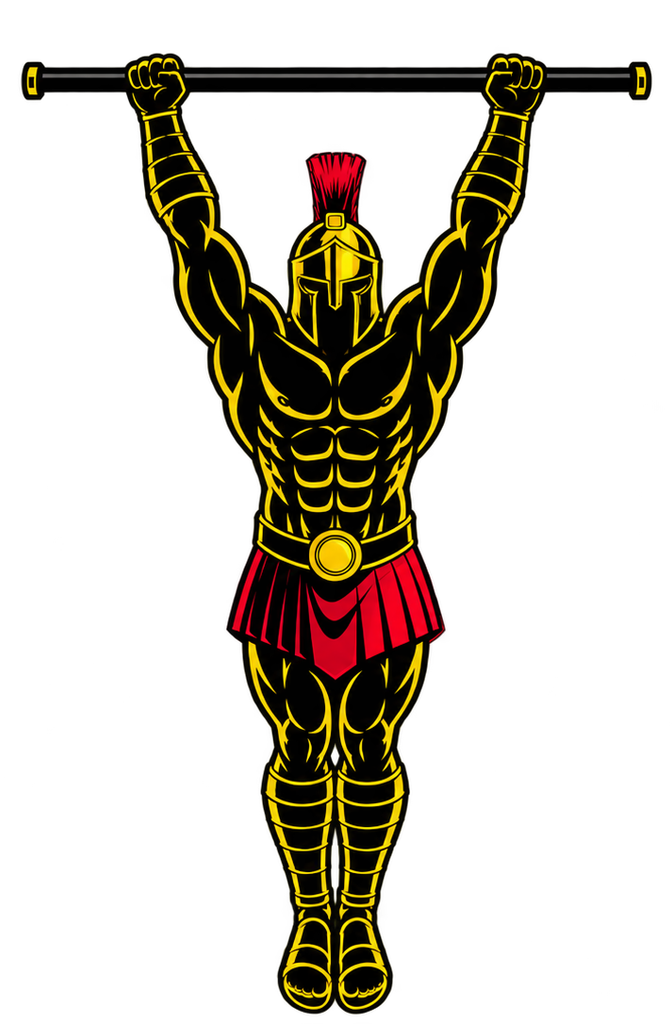
You begin hanging below the bar and pull yourself upward much higher than during an ordinary Pull-Up. As your torso reaches sufficient height, you bring your chest over the bar, transition your elbows from below to above it, and press until your arms are extended.
Muscle-Ups are commonly used in:
- Advanced calisthenics
- Street workout training
- Gymnastics-inspired training
- Upper-body strength programs
- Explosive pulling workouts
- Bodyweight skill training
- Pull-and-push workouts
- Athletic conditioning
Strict and kipping Muscle-Ups are different techniques. This guide focuses primarily on developing a controlled bar Muscle-Up with minimal unnecessary momentum.
Benefits of Muscle-Ups
Muscle-Ups combine several upper-body movement patterns into a single advanced exercise.
Benefits include:
- Develops explosive upper-body pulling strength
- Strengthens the lats and upper back
- Develops the chest, shoulders, and triceps
- Builds high-range pulling ability
- Challenges grip and forearm strength
- Develops transition strength and coordination
- Improves upper-body bodyweight control
- Combines pulling and pressing in one movement
- Provides progression beyond basic Pull-Ups and Dips
Because Muscle-Ups require multiple strength qualities at once, progress often depends on improving the weakest phase of the movement rather than simply performing more attempts.
Muscles Worked in Muscle-Ups
Muscle-Ups train a large portion of the upper body, with different muscles becoming more important during the pull, transition, and press.
Primary Muscles
- Latissimus Dorsi
- Biceps Brachii
- Triceps Brachii
- Pectoralis Major
- Anterior Deltoids
- Teres Major
Secondary Muscles
- Brachialis
- Brachioradialis
- Trapezius
- Rhomboids
- Posterior Deltoids
- Serratus Anterior
- Forearms
- Rotator Cuff Muscles
- Core Muscles
The lats and elbow flexors contribute strongly during the pull, while the chest, shoulders, and triceps become increasingly important through the transition and pressing phase.
How to Do Muscle-Ups (Step-by-Step)
Step 1: Grip the Pull-Up Bar
Grip a sturdy Pull-Up Bar with your palms facing away from you.
Use approximately a shoulder-width or slightly wider grip.
Wrap your hands securely around the bar and make sure you have sufficient clearance above it.
For a bar Muscle-Up, letting your hands sit slightly higher on the bar can make the transition into the support position easier than hanging entirely from your fingers.
Step 2: Establish the Starting Position
Begin hanging underneath the bar with your arms extended.
Keep your:
- Grip secure
- Core braced
- Legs controlled
- Shoulders controlled
- Head relatively neutral
For a strict Muscle-Up, minimize unnecessary swinging. If learning a dynamic version, any controlled body movement should be deliberate rather than an uncontrolled kip.
Step 3: Generate a Powerful High Pull
Pull upward explosively.
Do not aim merely to bring your chin above the bar. Drive your elbows down and back while trying to bring your torso significantly higher.
Think about pulling the bar toward your lower chest or upper abdomen as your strength improves.
The higher you can pull, the easier the transition generally becomes.
Step 4: Bring Your Torso Toward the Bar
As you continue rising, allow your torso to approach the bar.
Maintain tension through your core and keep the bar relatively close.
Your pulling path will differ from a normal strict Pull-Up because you need enough height and positioning to move from underneath the bar to above it.
Step 5: Transition Over the Bar
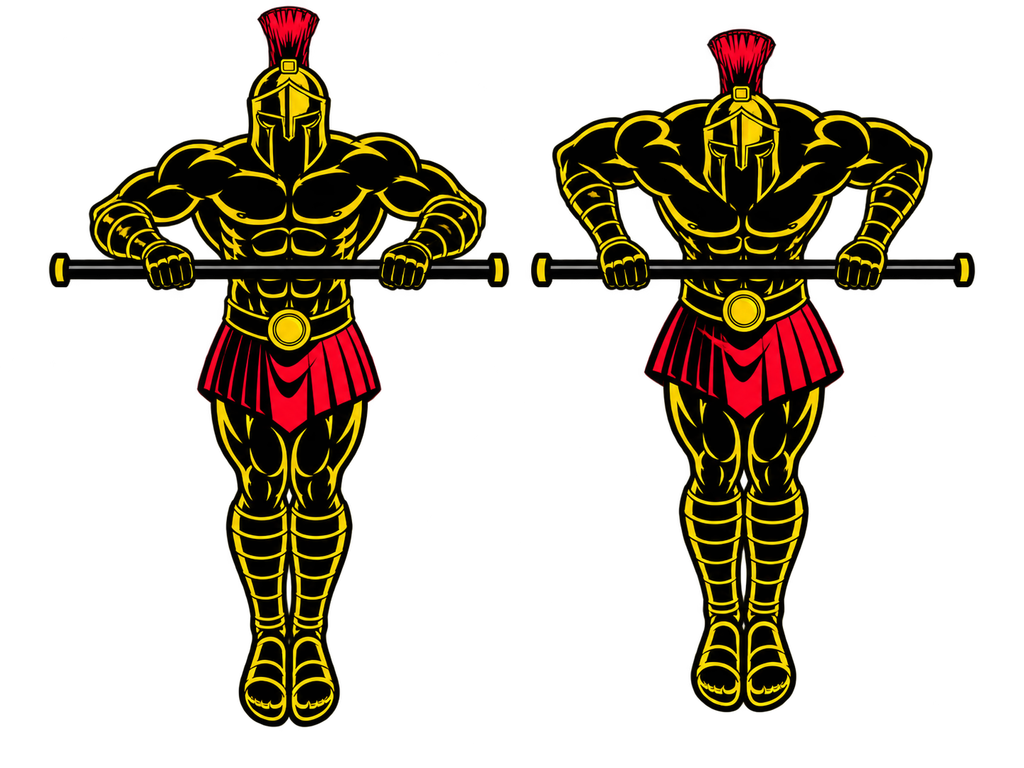
Once you have generated sufficient height, bring your shoulders and chest forward over the bar.
Your elbows must move from a pulling position below the bar into a position above and behind it that allows you to press.
Try to transition both arms smoothly rather than placing one elbow over the bar significantly before the other.
Step 6: Press Into the Support Position
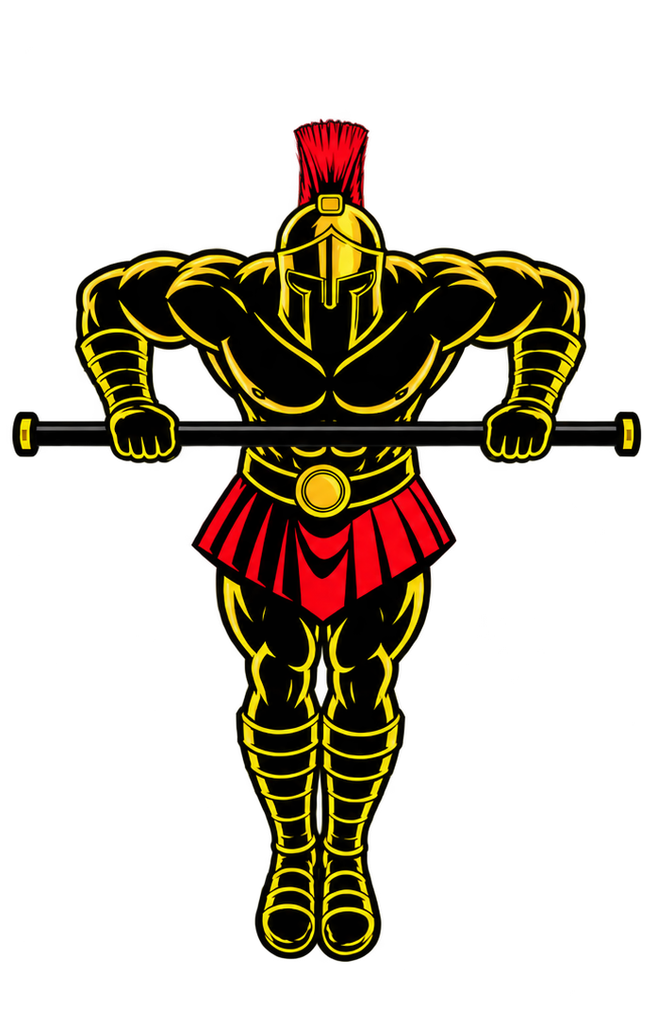
Once your chest is above the bar, begin the Straight-Bar Dip portion.
Press downward into the bar and extend your elbows.
Continue until you reach a stable support position above the bar with your arms extended.
Step 7: Return Under Control
Reverse the movement carefully.
Bend your elbows, lower your chest toward the bar, and transition back underneath it.
Control your descent until your arms return to extension.
Reset your body before attempting another repetition.
Muscle-Ups Form Checklist
Use this checklist to maintain proper Muscle-Up technique.
- Use a sturdy and secure Pull-Up Bar
- Grip approximately shoulder-width or slightly wider
- Keep your grip secure throughout the movement
- Begin from a controlled hanging position
- Brace your core
- Generate a powerful high pull
- Pull substantially higher than a normal Pull-Up
- Keep the bar relatively close to your body
- Bring your chest and shoulders over the bar
- Transition both elbows as smoothly as possible
- Avoid relying on a large uncontrolled kip
- Press strongly through the Straight-Bar Dip
- Finish in a stable support position
- Control your descent
- Stop practicing when fatigue significantly reduces technique
A successful Muscle-Up depends heavily on pulling high enough before attempting to transition over the bar.
Common Muscle-Ups Mistakes
Pulling Only to Chin Height
Problem: A standard chin-over-bar Pull-Up usually does not provide enough height for an efficient bar Muscle-Up transition.
Fix: Develop explosive High Pull-Ups and progressively work toward pulling the bar to your chest, lower chest, or upper abdomen.
Trying to Transition Too Early
Problem: Attempting to throw your chest over the bar before generating sufficient height can cause you to become stuck underneath it.
Fix: Prioritize the powerful pulling phase. Begin transitioning once your torso has risen high enough to move over the bar efficiently.
Chicken-Winging Over the Bar
Problem: Placing one elbow over the bar well before the other creates an uneven transition often called a chicken wing.
Fix: Use appropriate assistance and transition drills until you can bring both sides over the bar more smoothly. Avoid repeatedly forcing highly uneven repetitions.
Using Excessive Kipping
Problem: A large uncontrolled swing can turn the movement into a momentum-dominant repetition and make your technique inconsistent.
Fix: Develop sufficient pulling strength and use only the amount of deliberate body movement appropriate for the Muscle-Up style you are training.
Moving Too Far Away From the Bar
Problem: Pulling your body excessively backward can leave your torso too far from the bar to transition efficiently.
Fix: Generate height while maintaining an appropriate path that allows your torso to return toward and above the bar.
Having Insufficient Straight-Bar Dip Strength
Problem: You may successfully transition above the bar but fail to press into the final support position.
Fix: Train Straight-Bar Dips separately until you can press strongly and confidently from the bottom position.
Repeatedly Attempting Muscle-Ups While Fatigued
Problem: Muscle-Ups require power and coordination. As fatigue increases, pulling height can decrease, and transitions can become increasingly uneven.
Fix: Practice high-quality repetitions and skill work while relatively fresh. End the set when your pulling height or transition quality noticeably deteriorates.
Muscle-Ups Progressions and Variations
Muscle-Ups can be broken into easier progressions or advanced into more demanding variations.
Band-Assisted Muscle-Ups
A Resistance Band reduces the effective load and allows you to practice the complete movement.
How to Do Band-Assisted Muscle-Ups
- Secure an appropriate Resistance Band to the bar.
- Carefully place your foot or knee into the band.
- Begin from a controlled hanging position.
- Pull upward explosively toward the bar.
- Bring your chest and shoulders over the bar.
- Transition both elbows above it.
- Press into the top support position.
Control the band throughout the exercise and inspect it for damage before use.
Jumping Muscle-Ups
A low bar or stable platform allows your legs to provide assistance while you practice the transition.
How to Do Jumping Muscle-Ups
- Use a secure bar at an appropriate height.
- Stand on a stable platform underneath it.
- Grip the bar firmly.
- Use a controlled jump to assist your upward movement.
- Guide your chest over the bar.
- Transition your elbows into the pressing position.
- Press yourself into full support.
Gradually reduce the assistance from your legs as your technique improves.
Negative Muscle-Ups
Negative Muscle-Ups reverse the exercise and allow you to practice the transition under control.
How to Do Negative Muscle-Ups
- Begin in a stable support position above the bar.
- Bend your elbows and lower into the Straight-Bar Dip.
- Bring your chest toward the bar.
- Slowly transition your shoulders backward.
- Allow your elbows to move below the bar.
- Continue lowering through the high-pull position.
- Finish in a controlled hang.
Strict Muscle-Ups
The Strict Muscle-Up minimizes momentum and places greater emphasis on pulling strength and transition control.
How to Do Strict Muscle-Ups
- Begin from a controlled dead hang.
- Brace your core and minimize swinging.
- Pull upward as powerfully as possible.
- Bring your lower chest or upper abdomen toward the bar.
- Transition your torso over the bar.
- Move both elbows into the pressing position.
- Press to full support.
Weighted Muscle-Ups
Weighted Muscle-Ups are an advanced progression for athletes who have already developed consistent bodyweight repetitions.
How to Do Weighted Muscle-Ups
- Secure a modest additional load appropriately.
- Begin from a controlled hanging position.
- Generate a powerful high pull.
- Keep the added weight stable.
- Transition your torso over the bar.
- Press strongly through the dip.
- Finish under control before descending.
Weighted Muscle-Ups should only be introduced after strong, consistent bodyweight technique has been established.
Final Thoughts
Muscle-Ups are an advanced calisthenics exercise that combines explosive pulling, a technically demanding transition, and powerful pressing into one continuous movement.
They develop:
- Explosive pulling strength
- Lat and upper-back strength
- Biceps strength
- Chest and shoulder strength
- Triceps strength
- Grip strength
- Transition coordination
- Advanced bodyweight control
Do not rush directly from basic Pull-Ups into repeated Muscle-Up attempts. Build strong Pull-Ups, High Pull-Ups, Straight-Bar Dips, and controlled transition drills first.
The higher and more efficiently you can pull, the less difficult the transition becomes. Develop each phase individually, then gradually combine them into a smooth movement from below the bar to full support above it. Learn more about Calisthenics Skills here.
Essential Gear for Muscle-Ups
Muscle-Ups require relatively little equipment, but the equipment must safely accommodate powerful movement both below and above the bar.
- Pull-Up Bar: A sturdy bar with sufficient overhead and surrounding clearance is essential for bar Muscle-Ups.
- Resistance Bands: Useful for reducing the effective load while practicing the high pull and transition.
- Liquid Chalk or Gym Chalk: Can improve grip when sweaty hands limit powerful pulling or transition control.
- Stable Step or Platform: Useful for safely reaching the bar and practicing Jumping or Negative Muscle-Ups.
- Weighted Vest: An advanced option for adding resistance after consistent bodyweight Muscle-Ups have been mastered.
Muscle-Ups FAQ
Q1: How many Pull-Ups should I be able to do before learning Muscle-Ups?
There is no universal repetition requirement because pulling height and power matter in addition to repetition count. A foundation of strong, controlled Pull-Ups is important, but developing High Pull-Ups and the ability to pull your torso well above normal Pull-Up height is particularly useful.
Q2: Why can I do Pull-Ups but not Muscle-Ups?
Regular Pull-Ups alone do not train every requirement of the Muscle-Up. You may need greater explosive pulling height, better transition technique, stronger Straight-Bar Dips, or improved coordination between the three phases.
Q3: How high should I pull for a Muscle-Up?
You generally need to pull substantially higher than chin-over-bar height. Developing the ability to bring the bar toward your lower chest or upper abdomen can make the transition considerably easier.
Q4: Should beginners use Resistance Bands for Muscle-Ups?
Resistance Bands can be useful for practicing the complete movement when combined with separate strength work. Use an appropriate band, inspect it before training, secure it correctly, and avoid becoming dependent on excessive assistance.
Q5: How can I improve my Muscle-Ups?
Develop strong Pull-Ups, practice explosive High Pull-Ups, strengthen your Straight-Bar Dips, train assisted and negative transitions, and practice full Muscle-Ups while relatively fresh. Focus on increasing pulling height and creating a smooth transition rather than repeatedly forcing unsuccessful attempts.