Pull-Ups are one of the most effective bodyweight exercises for developing upper-body pulling strength. They primarily train your back and arms while also challenging your grip, shoulders, and core.
The exercise involves hanging from a Pull-Up Bar with an overhand grip and pulling your body upward until your chin reaches or passes the bar before lowering yourself under control.
Pull-Ups can be difficult for beginners because you must move almost your entire bodyweight. However, exercises such as Dead Hangs, Scapular Pull-Ups, Australian Rows, negatives, and Band-Assisted Pull-Ups can help you gradually develop the strength needed for your first full repetition.
What Are Pull-Ups?
Pull-Ups are a compound bodyweight exercise performed by hanging from an overhead bar and pulling your body upward using your back and arms.
In a standard Pull-Up, you use a pronated grip, meaning your palms face away from you. You begin with your arms extended, initiate the pull with controlled shoulder movement, bend your elbows, and continue upward until your chin reaches or clears the bar.
You then lower yourself under control until your arms return to extension.
Pull-Ups are commonly used in:
- Calisthenics training
- Back workouts
- Pull-day workouts
- Upper-body workouts
- Strength-training programs
- Military fitness training
- Climbing and obstacle-course preparation
- Bodyweight workouts
Pull-Ups can also provide the foundation for advanced exercises such as Archer Pull-Ups, Sternum Pull-Ups, Muscle-Ups, and One-Arm Pull-Up progressions.
Benefits of Pull-Ups
Pull-Ups train several major upper-body muscles simultaneously while requiring very little equipment.
Benefits include:
- Strengthens the latissimus dorsi
- Builds upper-back strength
- Strengthens the biceps and other elbow flexors
- Develops grip strength and endurance
- Improves vertical pulling strength
- Challenges the forearms
- Develops bodyweight control
- Requires minimal equipment
- Provides a foundation for advanced calisthenics skills
Because Pull-Ups move your body through space rather than moving an external weight around a fixed body position, they also require coordinated control between your arms, shoulders, back, and trunk.
Muscles Worked in Pull-Ups
Pull-Ups are a compound exercise involving multiple muscles across your back, arms, shoulders, and core.
Primary Muscles
- Latissimus Dorsi
- Biceps Brachii
- Brachialis
- Teres Major
Secondary Muscles
- Trapezius
- Rhomboids
- Brachioradialis
- Posterior Deltoids
- Forearms
- Rotator Cuff Muscles
- Core Muscles
The exact muscular contribution can vary according to your grip, technique, body proportions, and Pull-Up variation.
How to Do Pull-Ups (Step-by-Step)
Step 1: Grip the Pull-Up Bar
Stand underneath a secure Pull-Up Bar and grip it with your palms facing away from you.
Position your hands approximately shoulder-width apart or slightly wider.
Wrap your fingers and thumbs securely around the bar.
Avoid starting with an excessively wide grip, which can reduce your available range of motion.
Step 2: Establish the Starting Position
Hang beneath the bar with your arms extended.
Keep your:
- Grip secure
- Head neutral
- Core controlled
- Legs relatively still
- Body underneath the bar
If the bar is high, use a stable step or platform rather than repeatedly jumping to reach it.
Step 3: Initiate the Pull
Before aggressively bending your elbows, establish control through your shoulders and shoulder blades.
Begin pulling your body upward by driving your elbows down toward your sides.
Avoid suddenly yanking yourself upward from an uncontrolled hang.
Step 4: Pull Your Body Upward
Continue bending your elbows and pulling your body toward the bar.
Think about driving your elbows down rather than simply trying to lift your chin.
As you rise:
- Keep your core braced
- Maintain a secure grip
- Avoid excessive swinging
- Keep your shoulders controlled
- Avoid kicking your legs
Your body does not need to remain perfectly motionless, but unnecessary momentum should be minimized during a strict Pull-Up.
Step 5: Reach the Top Position
Continue pulling until your chin reaches or passes the height of the bar without excessively extending your neck.
Keep your chest naturally lifted and maintain control through your shoulders.
Do not throw your head backward simply to make your chin appear higher.
Step 6: Lower Yourself Under Control
Gradually extend your elbows and lower your body.
Resist gravity rather than dropping rapidly from the top.
Continue until your arms return to extension and you reach a controlled hanging position.
Step 7: Reset and Repeat
Stabilize yourself at the bottom before beginning your next repetition.
Maintain the same technique throughout your set.
If you can no longer complete the repetition without excessive swinging, kicking, or shortening the range of motion, end the set or switch to an easier Pull-Up progression.
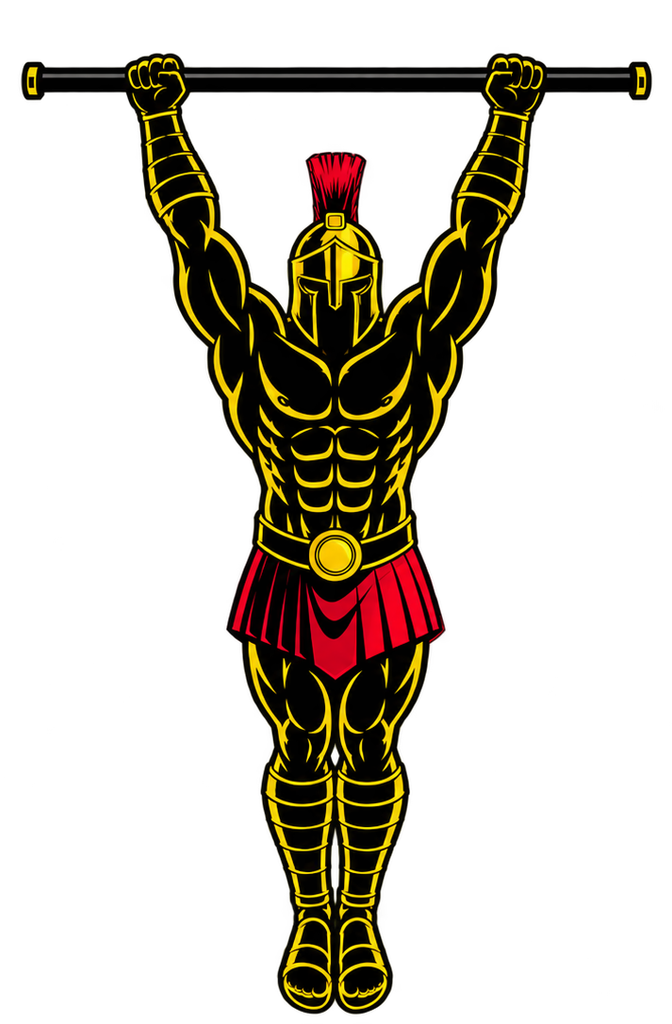
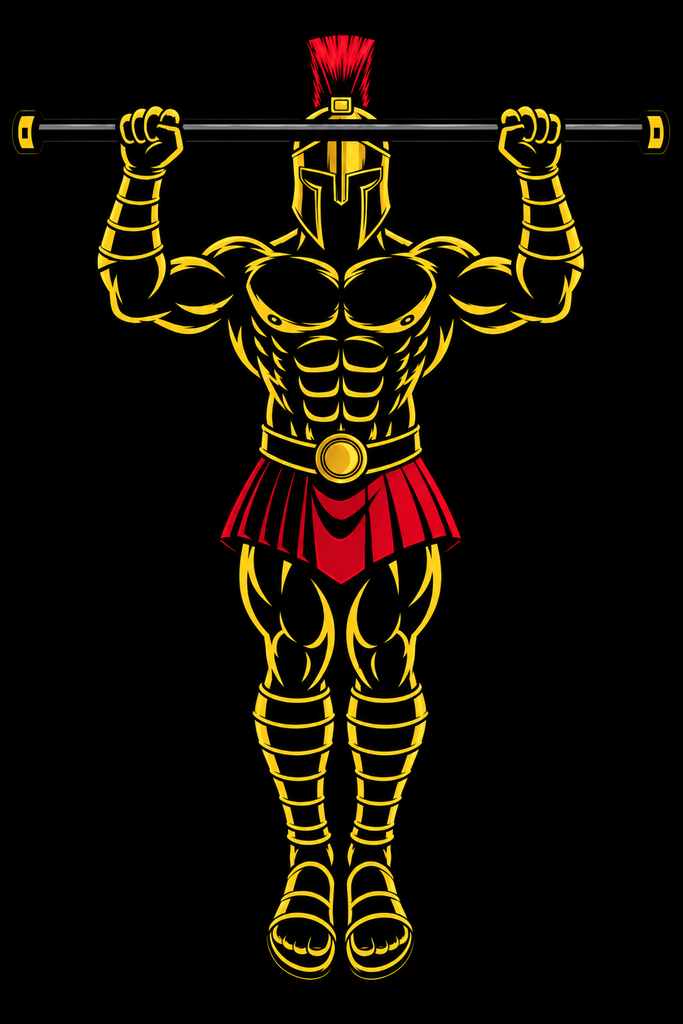
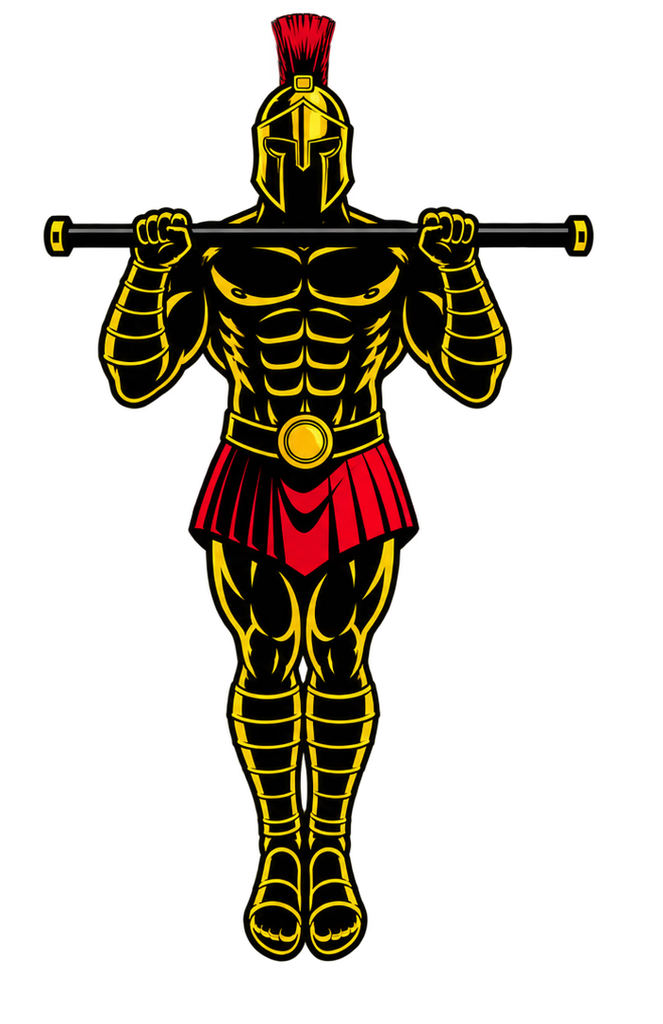
Pull-Ups Form Checklist
Use this checklist to maintain proper Pull-Up technique.
- Use a secure Pull-Up Bar
- Grip approximately shoulder-width or slightly wider
- Keep your grip secure
- Begin with your arms extended
- Establish shoulder control before pulling
- Keep your core braced
- Drive your elbows downward
- Pull smoothly toward the bar
- Keep your head relatively neutral
- Minimize swinging
- Avoid kicking your legs for momentum
- Bring your chin to or above bar height without craning your neck
- Lower yourself under control
- Return to a controlled bottom position
- Keep your repetitions consistent
Good Pull-Ups are built through controlled repetitions rather than simply accumulating as many reps as possible with deteriorating technique.
Common Pull-Ups Mistakes
Using Excessive Momentum
Problem: Swinging your body or kicking your legs can help you reach the bar without requiring the same amount of strict pulling strength.
Fix: Brace your core, control your legs, and initiate each repetition from a stable position.
Performing Partial Repetitions
Problem: Consistently avoiding either the bottom or upper portion of the movement reduces the range through which you train.
Fix: Use a controlled range of motion you can perform consistently. If full repetitions are currently too difficult, use an assisted variation rather than relying entirely on partial reps.
Craning the Neck Over the Bar
Problem: Aggressively extending your neck can make it appear that you have completed the repetition even though your body has not reached the same height.
Fix: Keep your head relatively neutral and achieve the top position by pulling your body upward.
Using an Excessively Wide Grip
Problem: A very wide grip can shorten your range of motion and may make the exercise unnecessarily difficult or uncomfortable.
Fix: Begin around shoulder-width or slightly wider and adjust according to your proportions and comfort.
Shrugging Without Control
Problem: Starting each repetition from an uncontrolled shoulder position can make your Pull-Up less stable.
Fix: Establish control through your shoulders before initiating the main pulling phase.
Dropping From the Top
Problem: Rapidly falling into the bottom position removes control from the lowering phase.
Fix: Lower yourself deliberately until your arms return to extension.
Continuing After Form Breaks Down
Problem: Fatigue can turn strict Pull-Ups into progressively shorter repetitions with excessive swinging and kicking.
Fix: Finish your set when you can no longer maintain your intended technique, or continue with an easier assisted variation.
Pull-Ups Progressions and Variations
Pull-Ups can be scaled for beginners or made significantly harder for advanced trainees.
Band-Assisted Pull-Ups
Resistance Bands reduce the effective load and can help beginners practice the complete Pull-Up movement.
How to Do Band-Assisted Pull-Ups
- Secure a suitable Resistance Band around the Pull-Up Bar.
- Carefully place your foot or knee into the band.
- Grip the bar with your palms facing away.
- Begin from a controlled hanging position.
- Pull your body upward until your chin reaches the bar.
- Lower yourself under control.
- Repeat without bouncing against the band.
Always inspect your Resistance Band before use and make sure it is securely attached.
Negative Pull-Ups
Negative Pull-Ups emphasize the lowering portion of the movement and are useful when you cannot yet perform full repetitions.
How to Do Negative Pull-Ups
- Use a stable platform to reach the top position.
- Grip the bar securely.
- Begin with your chin above the bar.
- Stabilize your shoulders and torso.
- Slowly lower yourself.
- Continue until your arms reach extension.
- Step back onto the platform and reset.
Chin-Ups
Chin-Ups use an underhand grip and generally increase the contribution of the elbow flexors.
How to Do Chin-Ups
- Grip the bar with your palms facing toward you.
- Begin with your arms extended.
- Establish shoulder control.
- Drive your elbows downward.
- Pull your body toward the bar.
- Bring your chin to or above bar height.
- Lower yourself under control.
Neutral-Grip Pull-Ups
Neutral-Grip Pull-Ups are performed with your palms facing each other on parallel handles.
How to Do Neutral-Grip Pull-Ups
- Grip two secure parallel handles.
- Begin from a controlled hang.
- Brace your core.
- Drive your elbows downward.
- Pull yourself toward the handles.
- Reach your highest controlled position.
- Lower yourself slowly.
Chest-to-Bar Pull-Ups
This harder variation requires you to pull higher than during a standard Pull-Up.
How to Do Chest-to-Bar Pull-Ups
- Begin from a controlled overhand hang.
- Establish shoulder control.
- Pull upward strongly.
- Drive your elbows down and backward.
- Continue beyond normal chin-over-bar height.
- Bring your upper chest toward the bar.
- Lower yourself under control.
Final Thoughts
Pull-Ups are one of the foundational exercises for developing bodyweight pulling strength and building a strong back and arms.
They develop:
- Lat strength
- Upper-back strength
- Biceps strength
- Grip strength
- Forearm endurance
- Vertical pulling strength
- Bodyweight control
- Calisthenics pulling ability
If you cannot perform a full Pull-Up yet, there is no need to rush the movement. Dead Hangs, Scapular Pull-Ups, Australian Rows, Band-Assisted Pull-Ups, and controlled negatives can gradually develop the strength needed for full repetitions.
Once you can perform clean Pull-Ups consistently, you can progress by adding repetitions, increasing total training volume, adding external resistance, or moving toward advanced variations.
Essential Gear for Pull-Ups
Using the right equipment can make pull-up training safer, more effective, and easier to progress from your first repetition to advanced variations.
- Pull-Up Bar: The most essential piece of equipment for performing pull-ups. Choose a sturdy doorway, wall-mounted, or freestanding pull-up bar that can safely support your body weight.
- Resistance Bands: Perfect for assisted pull-ups, helping beginners build the strength and confidence needed to perform unassisted repetitions with proper form.
- Gymnastics Rings: Provide a more natural hand position than a fixed bar, reducing wrist strain while improving shoulder stability and grip strength.
- Stable Step or Platform: Makes it easier to reach a high bar and safely set up exercises such as Negative Pull-Ups.
- Weighted Vest or Dip Belt: Ideal for advanced athletes who want to increase resistance and continue building upper-body strength once bodyweight pull-ups become easier.
- Gym Chalk or Liquid Chalk: Improves grip by reducing moisture on your hands, helping you maintain a secure hold during high-repetition sets and longer training sessions.
Pull-Ups FAQ
Q1: How many Pull-Ups should beginners do?
If you can already perform full Pull-Ups, begin with a small number of clean repetitions per set and stop before your technique breaks down. If you cannot yet complete a full repetition, use assisted Pull-Ups, negatives, and other progressions rather than forcing incomplete reps.
Q2: What if I cannot do a single Pull-Up?
Start by developing the individual components of the exercise. Dead Hangs can build grip endurance, Scapular Pull-Ups develop shoulder-blade control, Australian Rows strengthen your pulling muscles, and Band-Assisted or Negative Pull-Ups allow you to practice more of the Pull-Up movement.
Q3: Should my chin go over the bar during Pull-Ups?
For a conventional full Pull-Up, bringing your chin to or above bar height is a useful standard. Achieve this by pulling your body higher rather than excessively extending your neck.
Q4: What is the difference between Pull-Ups and Chin-Ups?
Pull-Ups typically use an overhand grip with the palms facing away, while Chin-Ups use an underhand grip with the palms facing toward you. Both train the back and arms, but the change in grip alters the mechanics and relative muscular contribution.
Q5: How can I get better at Pull-Ups?
Practice Pull-Ups consistently, strengthen your back and elbow flexors, improve your grip, and use appropriate progressions. Gradually increasing high-quality training volume or resistance as you become stronger can help you continue progressing.